
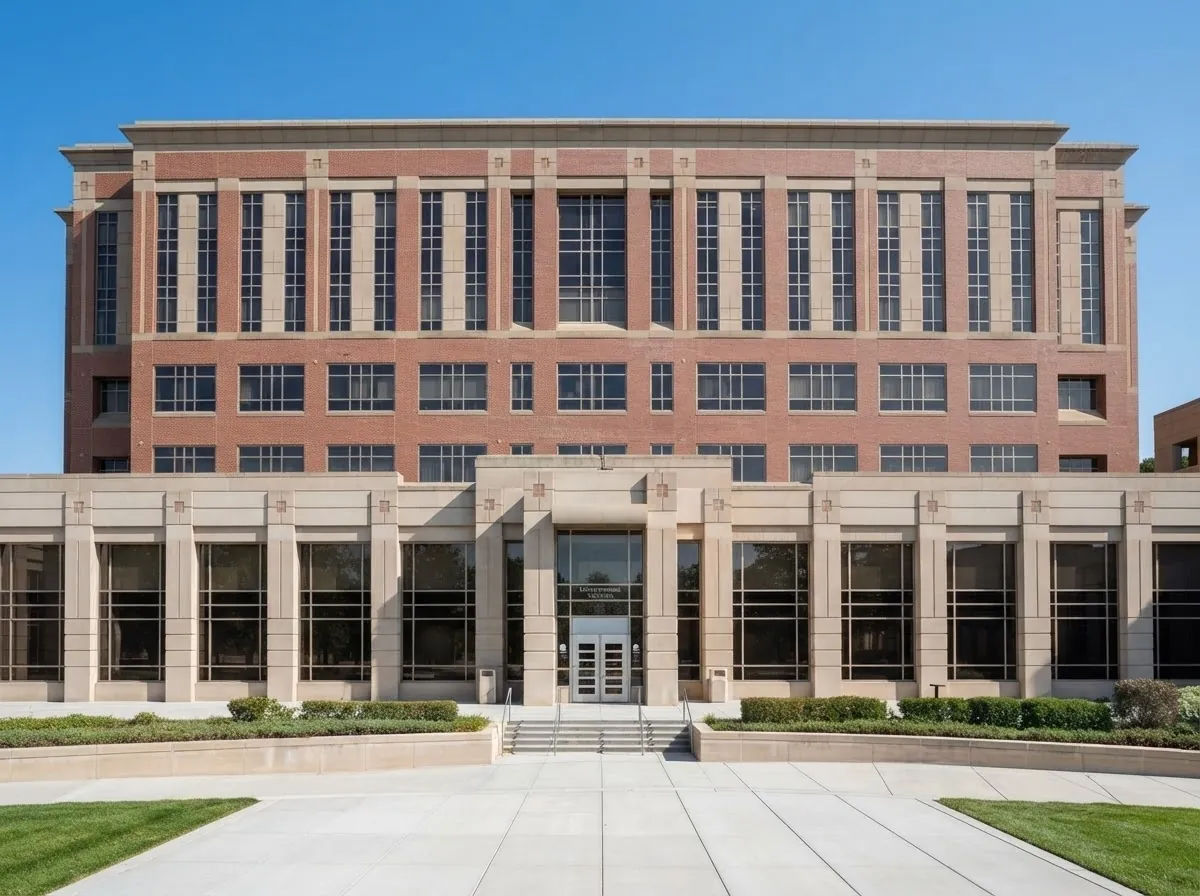
Court records in Olmsted County, Minnesota, are maintained by the district court clerk's office and are accessible through online tools, official court portals, and directly at the clerk's office. OlmstedCourt.us will help you find public information about court records in this county. Additionally, records can be searched through the Minnesota Court Records Online (MCRO) system, on the Olmsted County District Court page, or by contacting the court clerk's office in Rochester directly.
Olmsted Court System Overview
Olmsted County is part of the Third Judicial District of Minnesota. This district covers several counties in the southeastern part of the state, including Dodge, Fillmore, Freeborn, Houston, Mower, Olmsted, Rice, Steele, Wabasha, and Waseca. Minnesota does not have a separate magistrate court— all first-instance jurisdiction belongs to the district court, which handles civil, criminal, family, probate, and juvenile cases.
The courthouse is located in the city of Rochester:
The court operates on weekdays; the exact schedule should be confirmed by phone or on the district court page.
Courts Serving Olmsted
Residents of the county are served by several courts of different levels of jurisdiction.
State District Court
U.S. District Court
Olmsted County falls under the jurisdiction of the U.S. District Court for the District of Minnesota.
Cases involving Olmsted residents may also be heard at the courthouse in Minneapolis or St. Paul, depending on the assignment.
U.S. Bankruptcy Court
There are no separate municipal courts within Olmsted County—all first-instance cases are heard by the state district court.
What Types of Cases Olmsted Courts Hear
The Olmsted District Court has first-instance jurisdiction over all categories of cases. Here are the main types:
- Criminal cases: felonies, misdemeanors, petty misdemeanors
- Traffic violations, including DUI/DWI
- Civil lawsuits of any size, including small claims (conciliation court / small claims)
- Family law: divorce, custody, child support, protective orders
- Probate cases: estate administration, guardianship, conservatorship
- Juvenile cases: juvenile offenses, child protection cases, adoption
District Court Cases in Olmsted
In Minnesota, the district court is the sole court of general jurisdiction for first-instance cases. Therefore, it handles both serious criminal cases (felonies) and civil lawsuits of any amount. Cases are initiated by filing a criminal complaint by the prosecutor or a civil lawsuit by a party. Once filed, the case is assigned to a specific judge.
Felonies go through preliminary hearings, arraignment, pre-trial motions, and, if necessary, a jury trial. Civil cases with claims over $15,000 typically require a longer pre-trial phase with evidence exchange (discovery). Appeals from Conciliation Court decisions are also heard by the district court.
Magistrate Court Cases in Olmsted
Minnesota does not have a separate magistrate court system in the traditional sense. Instead, the functions performed by magistrates in other states are carried out by district court judges and referees. Misdemeanors, petty misdemeanors, DWI cases, and traffic violations are all heard by the district court.
Conciliation Court (similar to small claims court) hears civil disputes up to $15,000. The procedure is simplified: parties often represent themselves without attorneys. Preliminary hearings in criminal cases, bail setting, and initial court appearances of defendants also take place in the Olmsted District Court.
Family Law, Probate, and Juvenile Matters in Olmsted
Family Law. Divorce, child custody, child support, paternity establishment, and protective orders from domestic violence are handled by the district court. Certified copies of divorce decrees can be obtained from the court clerk where the case was heard—more details on this can be found on the State Law Library page. Marriage and divorce records are also maintained by the county vital records department.
Probate Cases. Estate administration, appointment of guardians and conservators, and trust matters fall under the jurisdiction of the district court. If the deceased resided in Olmsted County, the case is opened here.
Juvenile Matters. Juvenile cases—both offenses and child protection—are heard by the district court in a closed setting. Juvenile records are confidential under Minnesota law and are not publicly accessible.
How Cases Move Through the Olmsted Court System
- Case Initiation. A criminal case begins with the filing of a complaint by the prosecutor. A civil case starts with a complaint or petition filed by the plaintiff.
- Judge Assignment. The court clerk assigns a case number and designates a judge for the case.
- First Hearing. In criminal cases, this is the arraignment—charges are announced to the defendant, who pleads guilty or not guilty. In civil cases, it is a scheduling conference.
- Pre-Trial Stage. Parties exchange evidence and file motions. Plea negotiations may occur in criminal cases.
- Trial or Resolution. The case concludes with a jury verdict, guilty plea, settlement, or default judgment.
- Post-Judgment. The convicted individual is sentenced. Parties may appeal to the Minnesota Court of Appeals. In civil cases, the judgment is enforced.
Court Administration, Local Rules, and Public Access in Olmsted
The administration of the courts in the Third Judicial District is carried out by the district's administrative judge in conjunction with the trial court administrator. To contact the court administration, call (507) 722-7264.
Local rules for the Third Judicial District are published on the Minnesota Judicial Branch website. These rules govern the filing of documents, hearing schedules, and other procedural matters.
Regarding public access: most court records in Minnesota are publicly accessible under the Rules of Public Access to Records of the Judicial Branch. However, certain categories—juvenile cases, sealed records, certain family cases—have restricted access. Public records can be viewed through terminals at the courthouse or online via MCRO, although the online version may not contain all documents.
Hearings are generally open to the public. Some sessions are held remotely—confirm the format of a specific hearing with the court clerk. Public data requests for the county can also be submitted through the Data Practice Request page in accordance with the Minnesota Government Data Practices Act (MGDPA, Chapter 13 of Minnesota Statutes).
Court Records and Related Court Resources in Olmsted
- Online Case Search. The Minnesota Court Records Online (MCRO) system allows searching state district court records, including Olmsted cases. You can search by party name or case number through the MCRO search page.
- General Court Records Information. The Minnesota State Law Library explains which documents are kept in district court cases and how to obtain them.
- Active Arrest Warrants. The county sheriff's office publishes an active warrants list on its website.
- Who Is in Custody. A daily updated in-custody list of the Olmsted County Adult Detention Center.
- Sheriff's Office Activity Log. Activity logs include the date, time, type of incident, and call.
- County Sheriff's Office. General information and contact details (warrants—507-328-6830, detention center—507-328-6790) can be found on the sheriff's office website.
- Property Records and Land Documents. The Property Records & Licensing department maintains land and individual records. For online search of recorded documents, use LandShark Online Research.
- Vital Records. Birth, death, and marriage certificates can be ordered through the county's vital records department.
- Sex Offender Registry. The registry is maintained at the state level by the Minnesota Bureau of Criminal Apprehension (BCA) and is available online on the Minnesota Department of Corrections website.
- Forms and Self-Help Resources. The Access Case Records page of the Minnesota Judicial Branch provides links to forms, instructions, and information for individuals representing themselves in court.